A Minor Journey
Spyros Kotsalas
November 3 – November 28 2026 Athens CURATED BY Maria Almpani - Spyros Kotsalas PARTICIPANTS Spyros Kotsalas
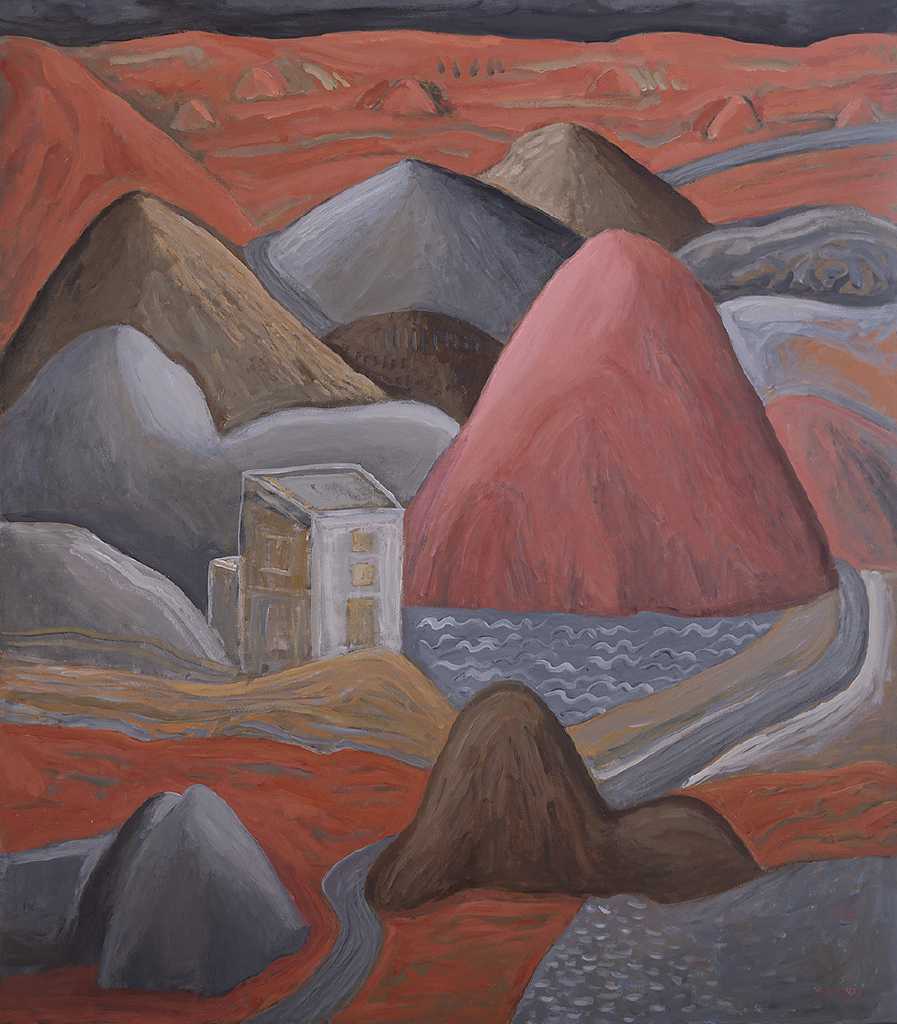

Ex nihilo,
Μικτή τεχνική,
160 × 140 cm
2025
We exist because we pass through.
Spyros Kotsalas’s new series of works seems to stem from a simple yet overwhelming realization: that we are here only for a short while. And from this realization, all questions arise. If we are merely passing through, how do we love the world? How do we make a home in a place we know we will one day leave behind? Where do we go when we leave?
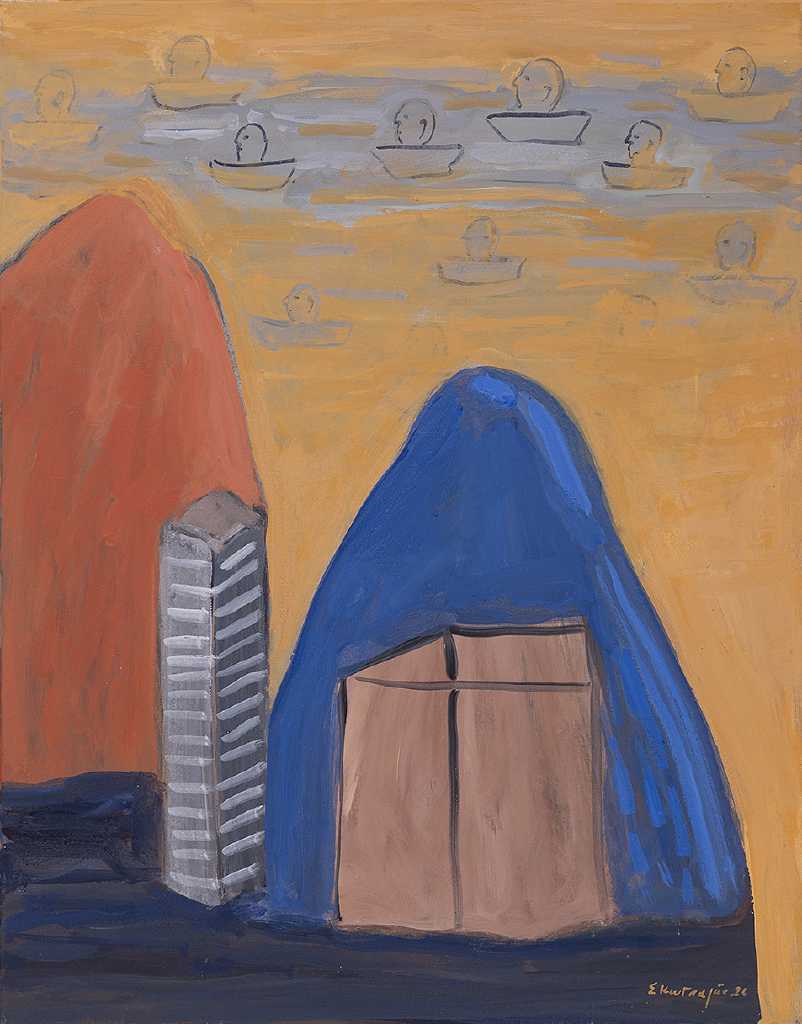
Perhaps the key to interpreting all these paintings lies in the work featuring the small boats with the recurring human heads. We do not know who these people are or where they are headed. Their faces almost lose their individuality and become a symbol of a shared fate. They are together, and yet each one seems alone on their journey. The boat is fragile, the world around them boundless, their destination unknown. It is not merely an image of a journey; it is an image of the human condition itself: we exist because we are on a journey.
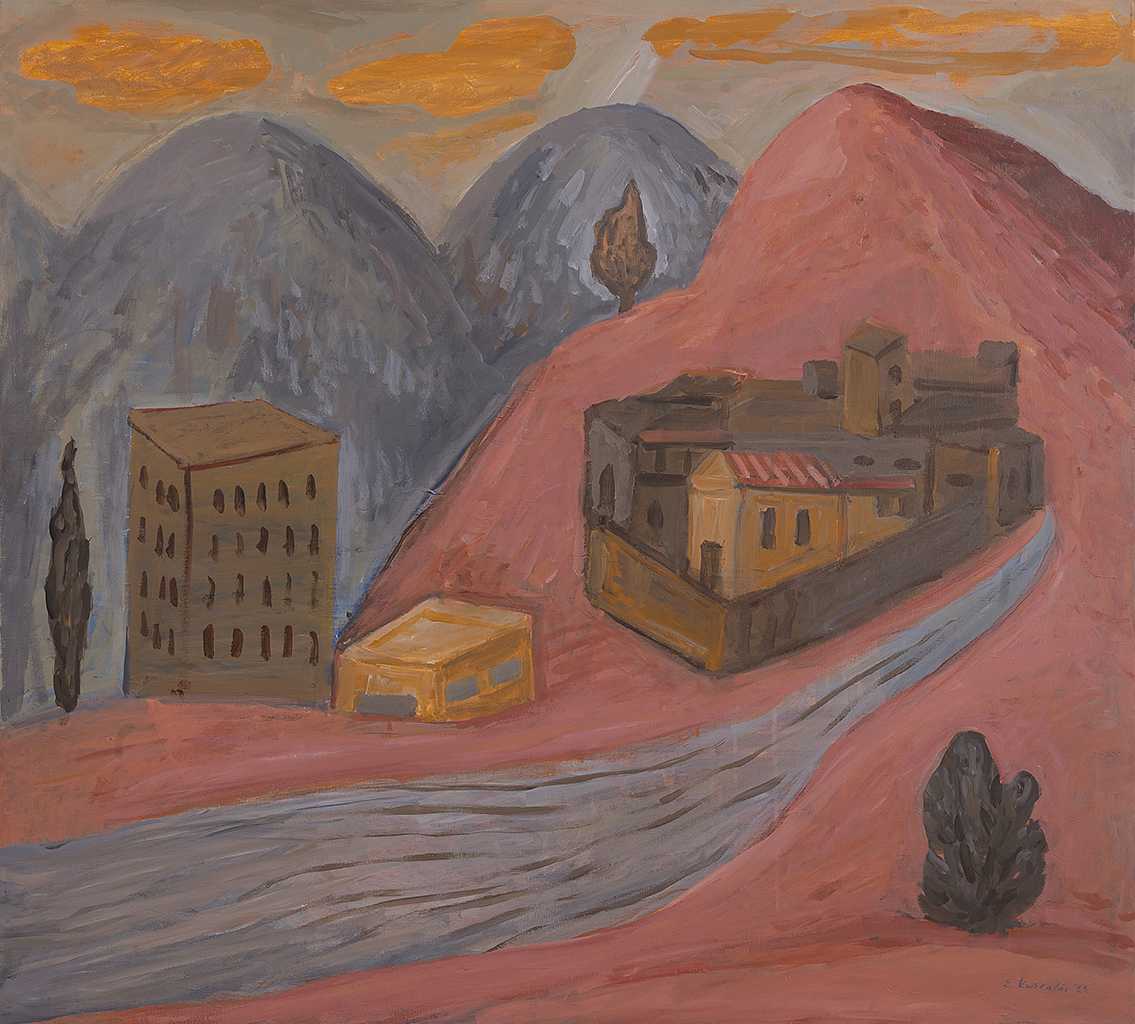

Ἀέναη πηγὴ ἐνέργειας,
Μικτή τεχνική,
100 × 110 cm
2025
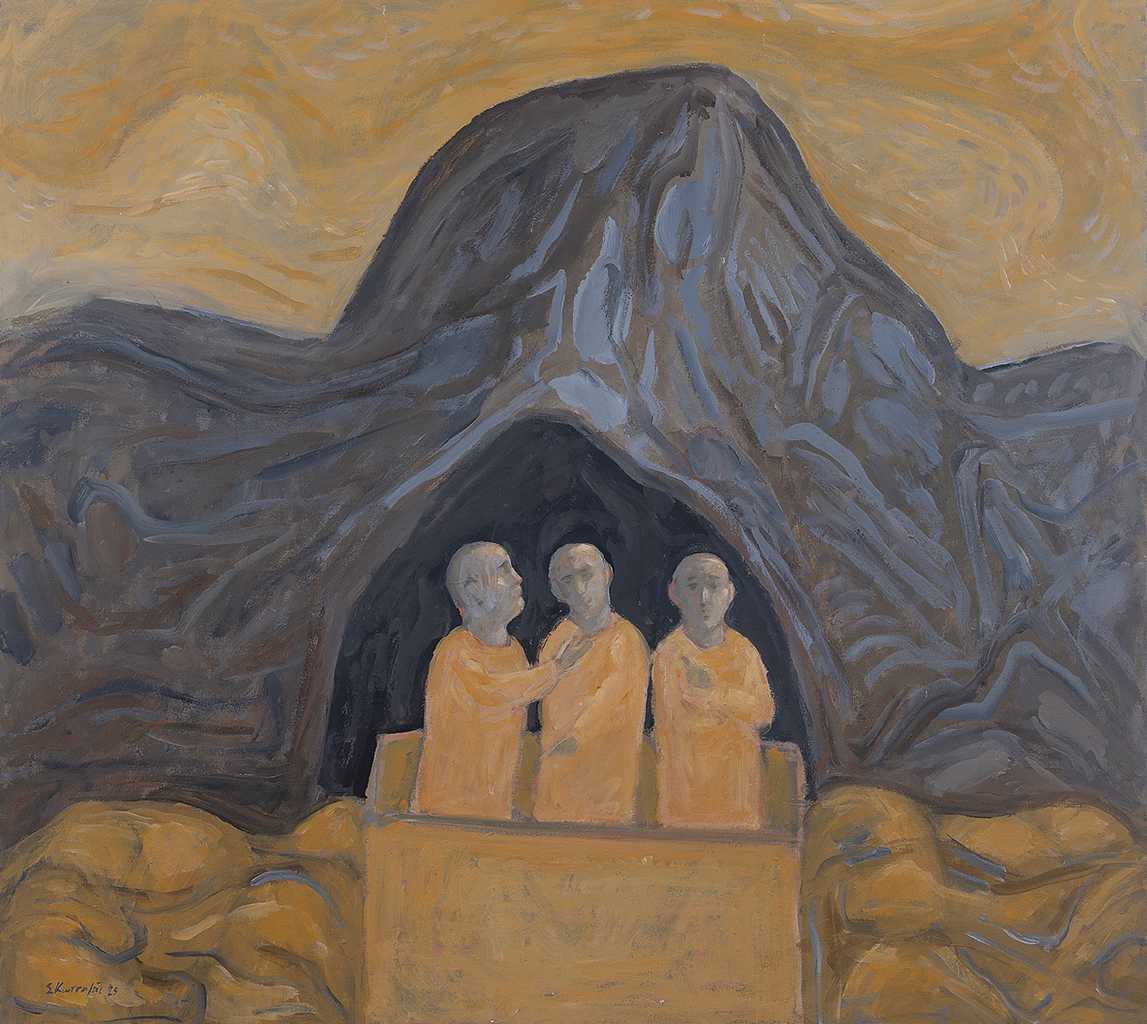
Elsewhere, the very act of passing through takes on an almost ritualistic form. Three human figures stand before a mountain's dark opening. We do not know whether they have just emerged from it or are about to return there. They stand on the threshold between light and darkness, between the visible and the unseen. One touches the other, as if the transition were not only a personal but also a shared human experience. Behind them, the dark opening of the mountain becomes an unseen place from which we come or toward which we are heading.
Beyond that, the artist’s figures seem to live within the same uncertainty. They never stand completely still, even when their bodies are motionless. Something within them is shifting, as if they were constantly caught between two places: the one they are leaving behind and the one they have not yet reached.
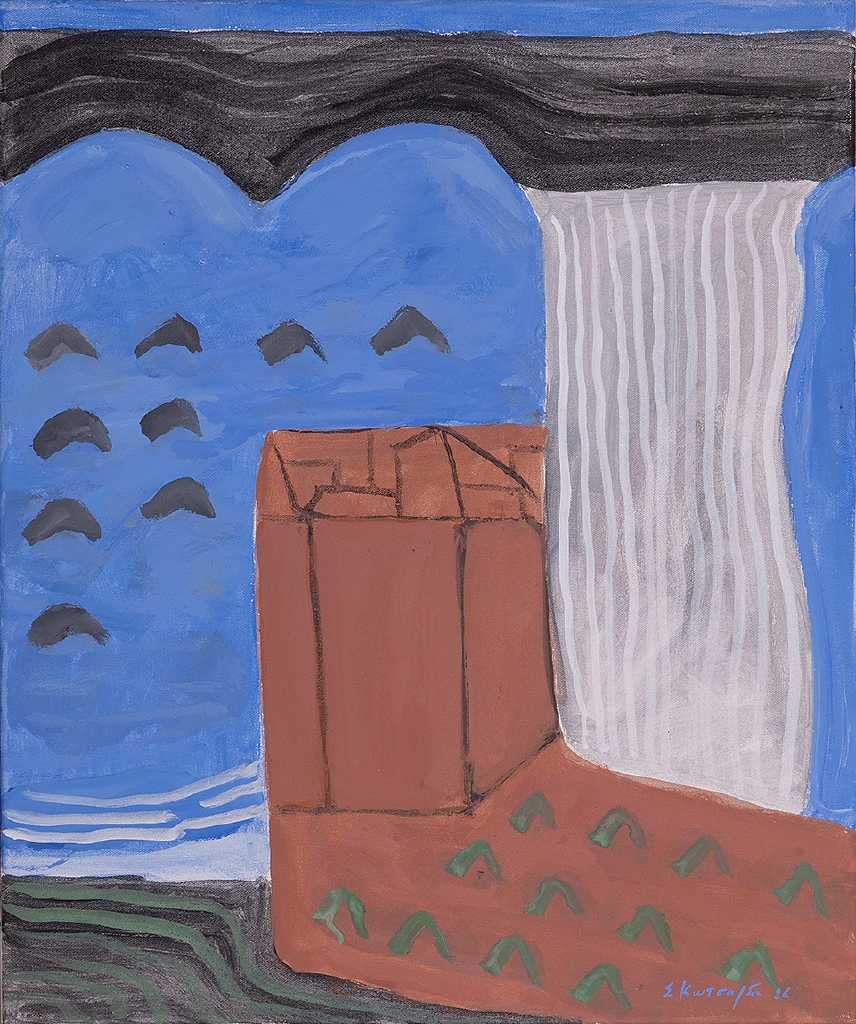

Ἀπροσδιόριστος χώρος ἀνάμεσα στὸ τώρα καὶ στὸ πάντα,
Μικτή τεχνική,
61 × 51 cm
2026
In Kotsalas’s paintings, the human figure appears like an actor who enters a scene for a brief moment. We do not know what happened before his entrance, nor what will happen after his exit. We see him only for as long as he remains before us. The reclining figure amid the red mountains is perhaps one of the most powerful images in this series. We do not know if he is sleeping, waiting, suffering, or on the verge of departure. The body is fragile; around it, however, the mountains seem to belong to a time far greater than human time.
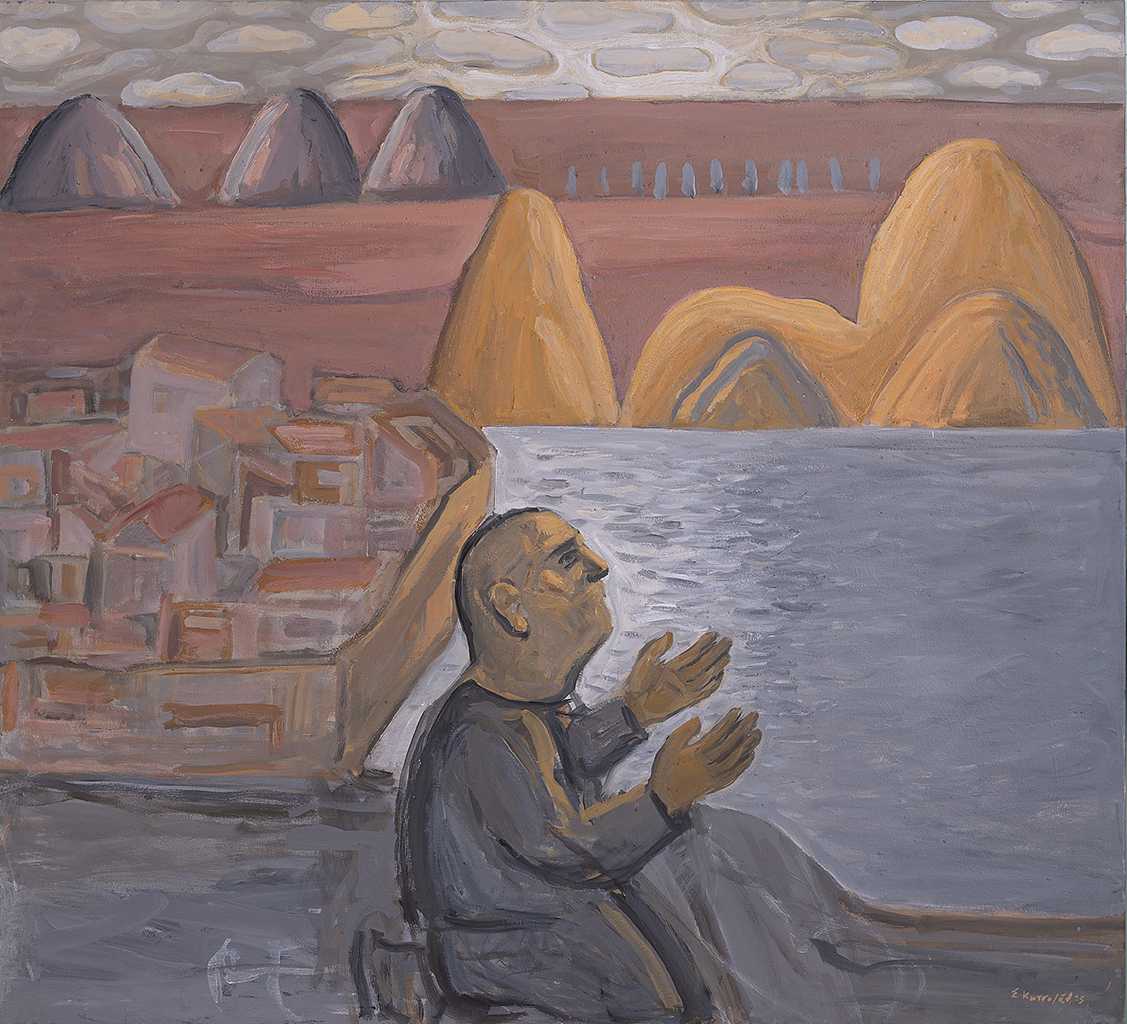
Elsewhere, a head emerges from a mass that can be interpreted as a body, clothing, and a mountain all at once. Its curves echo those of the landscape. The kinship between human and nature becomes almost the same here. In another painting, a figure raises a hand toward a small structure with a cross atop the mountain, reminiscent of a funerary monument. The question of death takes on a more specific point of reference. The gesture could be a prayer, a greeting, or a conversation with someone absent. Thus, the question “Where am I going?” is joined by “Where are you, now that you’ve left?” The anguish also concerns the bond with the dead.
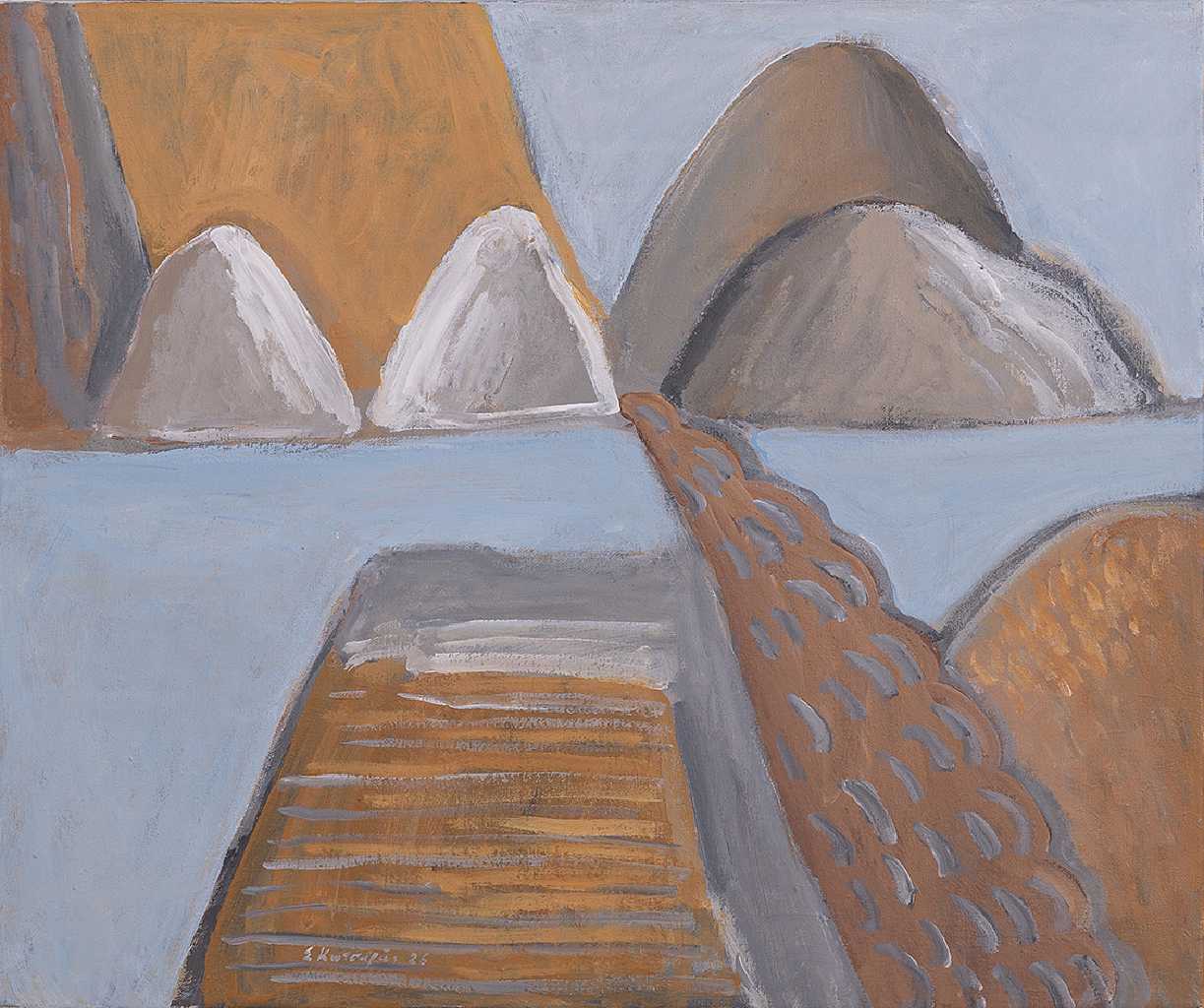

Αὐτὸ ποὺ ἔρχεται ἀπὸ τὸ αὔριο,
Ακρυλικά,
50 × 60 cm
2026
I look at the work where a body lies horizontally in the water and an enigmatic place lies opposite it. Here, the question “Where am I going?” becomes the very structure of the image. The person seems to be floating, unable to direct their course. His position at the lower edge of the painting intensifies the sense that he is on the edge of the visible, almost ready to step outside our field of view. The island embodies all the ambiguity of the destination. The dark openings resemble windows, but they can also bring to mind burial chambers.The tower at the summit gives it a monumental character. It could be seen as a place of the dead, as a final resting place, without the image specifying what kind of existence might be possible there. It remains silent, with no visible human presence.
Most significantly, however, the body and the island share the same earthy material, the same ochre and brown hues. Amid the vast blue, they seem kindred. The person may be returning to something to which they already belong. But this return leaves their face, their consciousness, and their uniqueness unresolved. The distance between the body and the mainland remains unbridged.
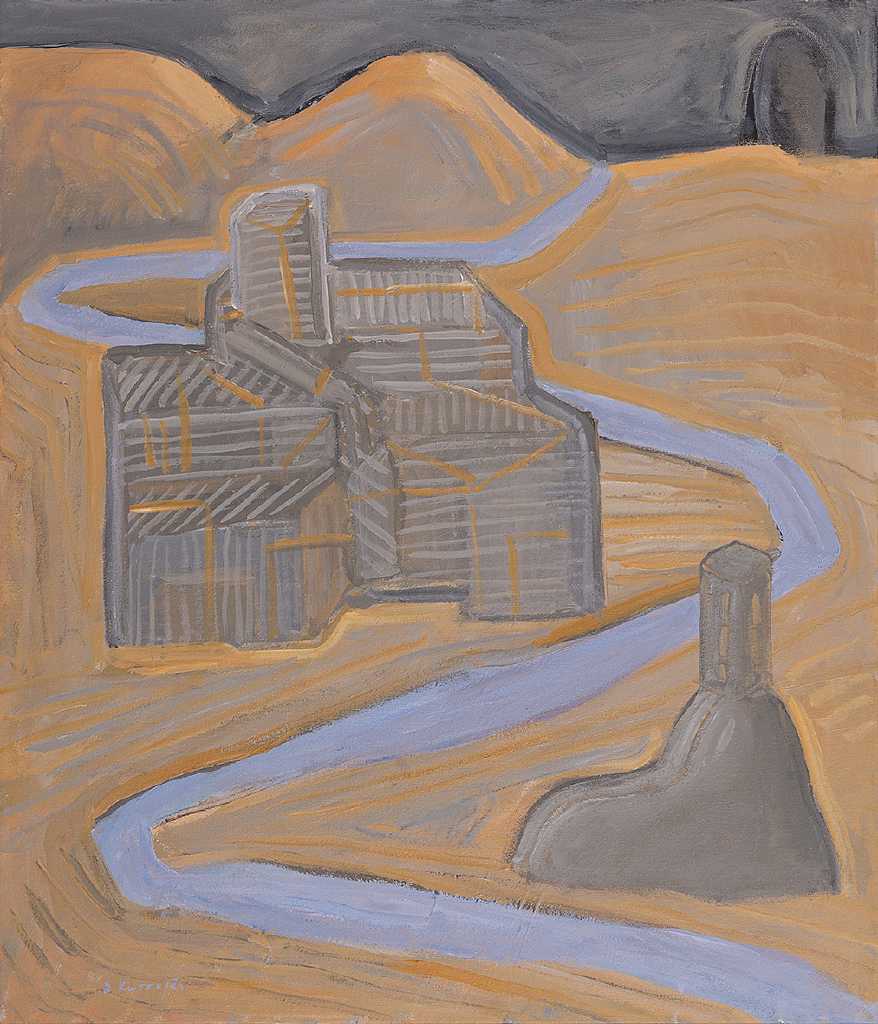

Αὐτὸ ποὺ μένει καὶ αὐτὸ ποὺ φεύγει,
Ακρυλικά,
70 × 60 cm
2026
Despite the receding sense of individuality, faces take on special significance. Amid the repetitive forms, one gaze remains distinctly focused. It is as if all the difficulty of departure is concentrated there: the world may embrace me once more; but will the one who looked at it be saved? The raised hand thus seems to hold both hope and doubt as to whether there is anyone on the other side: “Is there someone waiting for me?”
The landscape in Kotsalas’s works is a presence. It surrounds people, exposes them, makes them seem small; at times it protects them, and at other times it leaves them alone. The waters, the horizons, the barren expanses, and the mountain ranges do not merely denote a place. They signify permanence. The world existed before us and will continue after us.
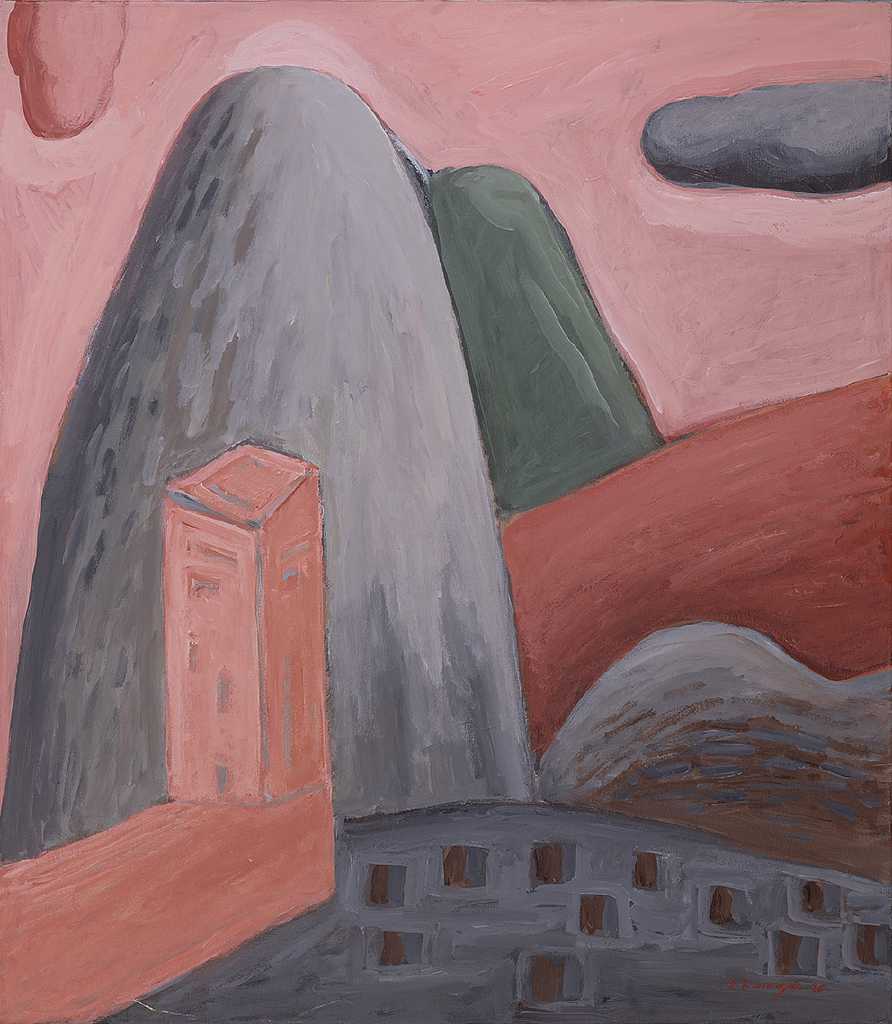

Αὐτὸν τὸν πύργον τὸν χτίζω ἐδῶ καὶ αἰῶνες,
Ακρυλικά,
80 × 70 cm
2026
In the work featuring the small chapel on the left and the statue on the right, the space seems to be organized like a stage between two forms of memory: the little church, which evokes the continuity of the community, and the monument’s static human presence. Between them, the void is not neutral; it becomes a place of silence, distance, and time.
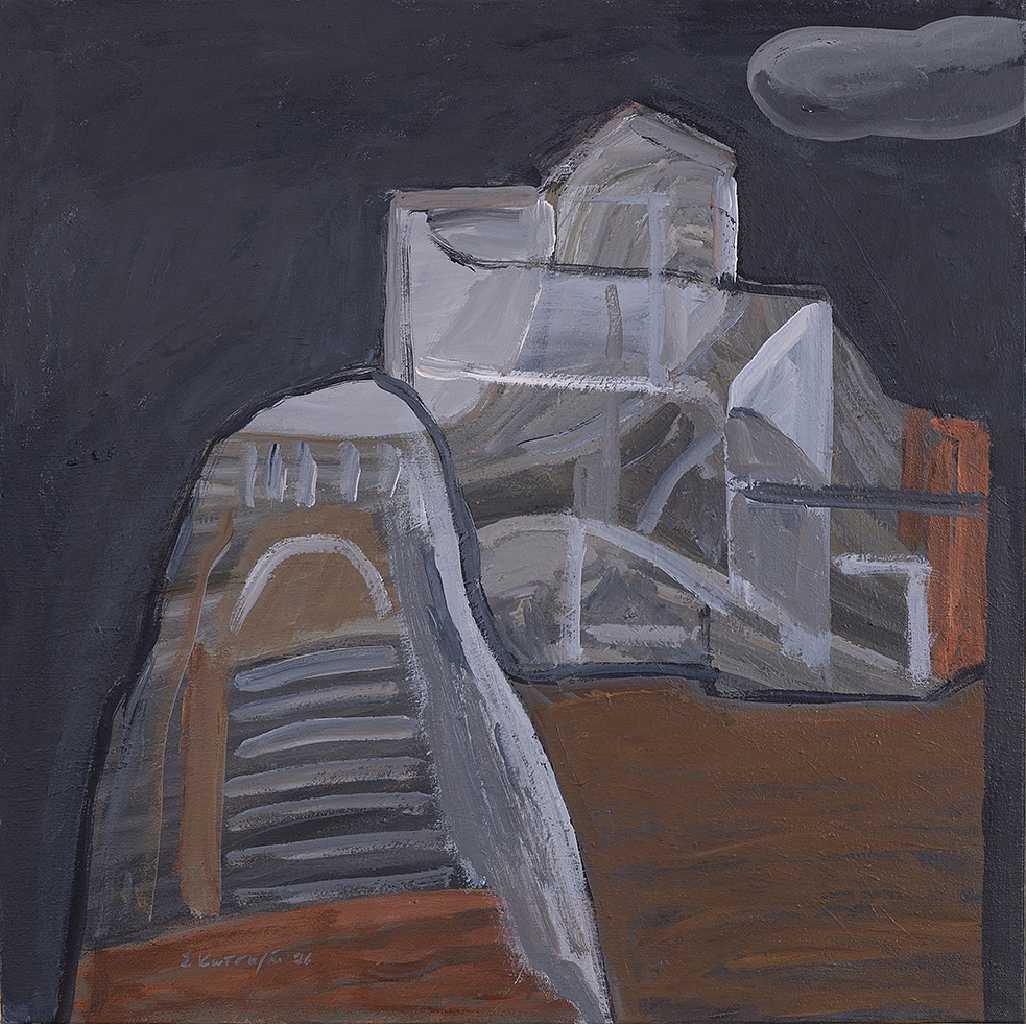
Even when a person is gone, their trace remains. In the blue landscape with its staircases, openings, and pathways, the space seems to be waiting. As if someone had just passed through or as if someone were about to appear. The staircases lead somewhere we cannot see. The openings promise a space hidden behind the image. The landscape thus acquires a memory.
And perhaps this is one of the most moving aspects of Kotsalas’s painting: his works do not merely show us what is there. They also speak of what is missing—of the before and the after, of the one who has passed by and the one who is yet to come, of something that is always just slightly outside the frame.
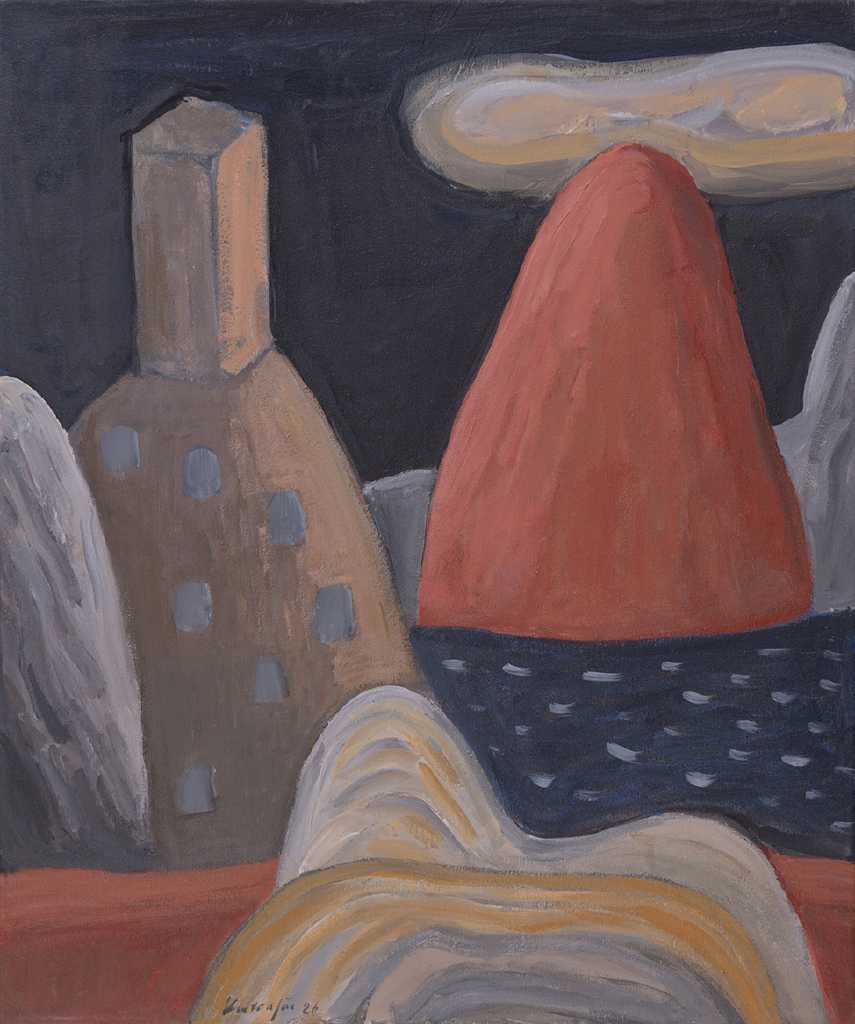

Γεννήθηκα πλάι στὸ σπίτι τοῦ Micavio,
Μικτή τεχνική,
61 × 51 cm
2026
The color palette serves this silence. The ochres, deep reds, whites, grays, and cool blues do not scream. They possess something of the austerity of an old icon, something that, from afar, evokes the restrained economy of color. Color does not merely describe; it recalls. In The Red Mountains, for example, the landscape ceases to be merely a place and becomes almost an inner landscape, an extension of the figure’s mental state. From this perspective, the painter engages in a dialogue with the long tradition of Greek iconography, where space need not be naturalistic to be true: from the earthy economy of color to the compact architectural volumes and the symbolic function of the landscape.
And the light seems to know that it must not reveal everything. It illuminates one form, allows another to fade into the shadows, and creates zones of light and darkness. Just as on stage, so too here, what remains unseen often holds greater power than what lies before our eyes.
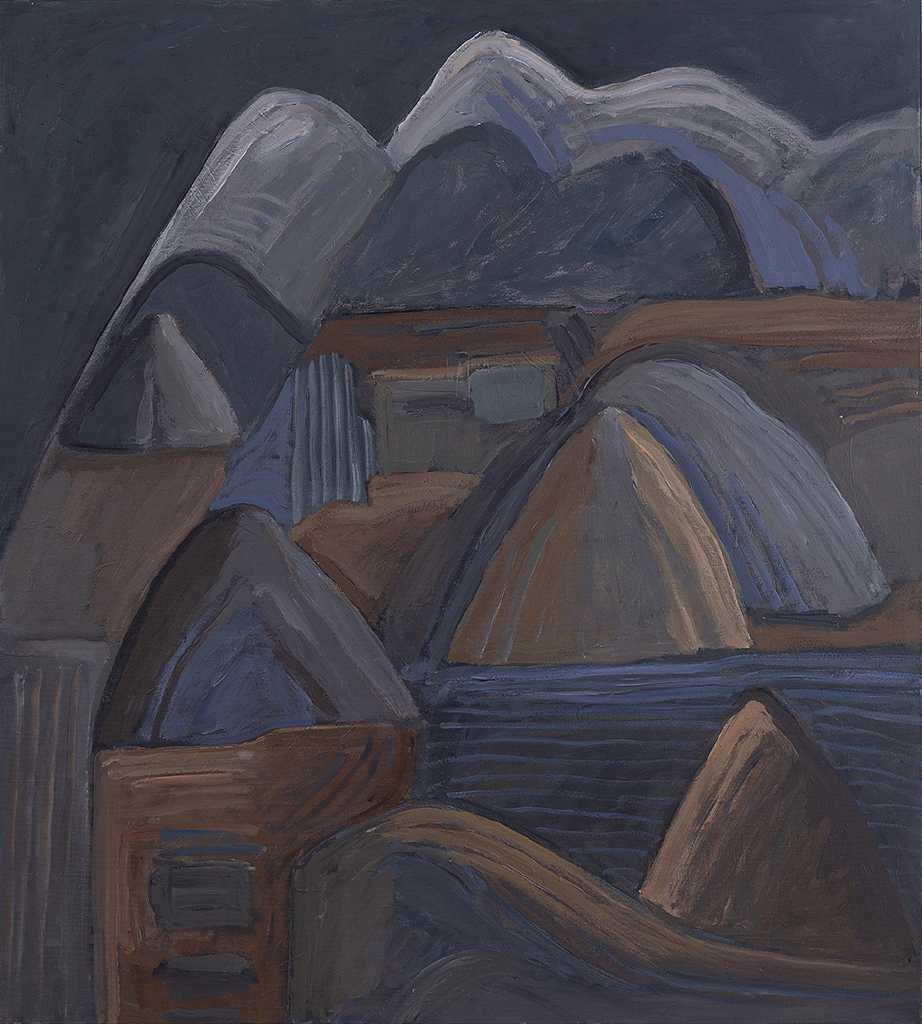

Ἡ ἀειθαλὴς μήτρα τῶν βουνῶν,
Ακρυλικά,
100 × 90 cm
2026
There is always something outside the picture. A gaze turns beyond the frame. A street continues. A staircase leads elsewhere. An opening awaits. And suddenly, the picture’s frame itself ceases to be a boundary and becomes a threshold.
Spyros Kotsalas’s works are reminiscent of that moment in the theater when the stage has just emptied. The actor has left, but something of his presence still lingers there—a trace, a silence, a memory.
And then the only question that remains is: What does it mean to appear briefly on the world’s stage, knowing that one day you will have to leave it?
IOSIF VIVILAKIS Professor of Theater Studies, National and Kapodistrian University of Athens
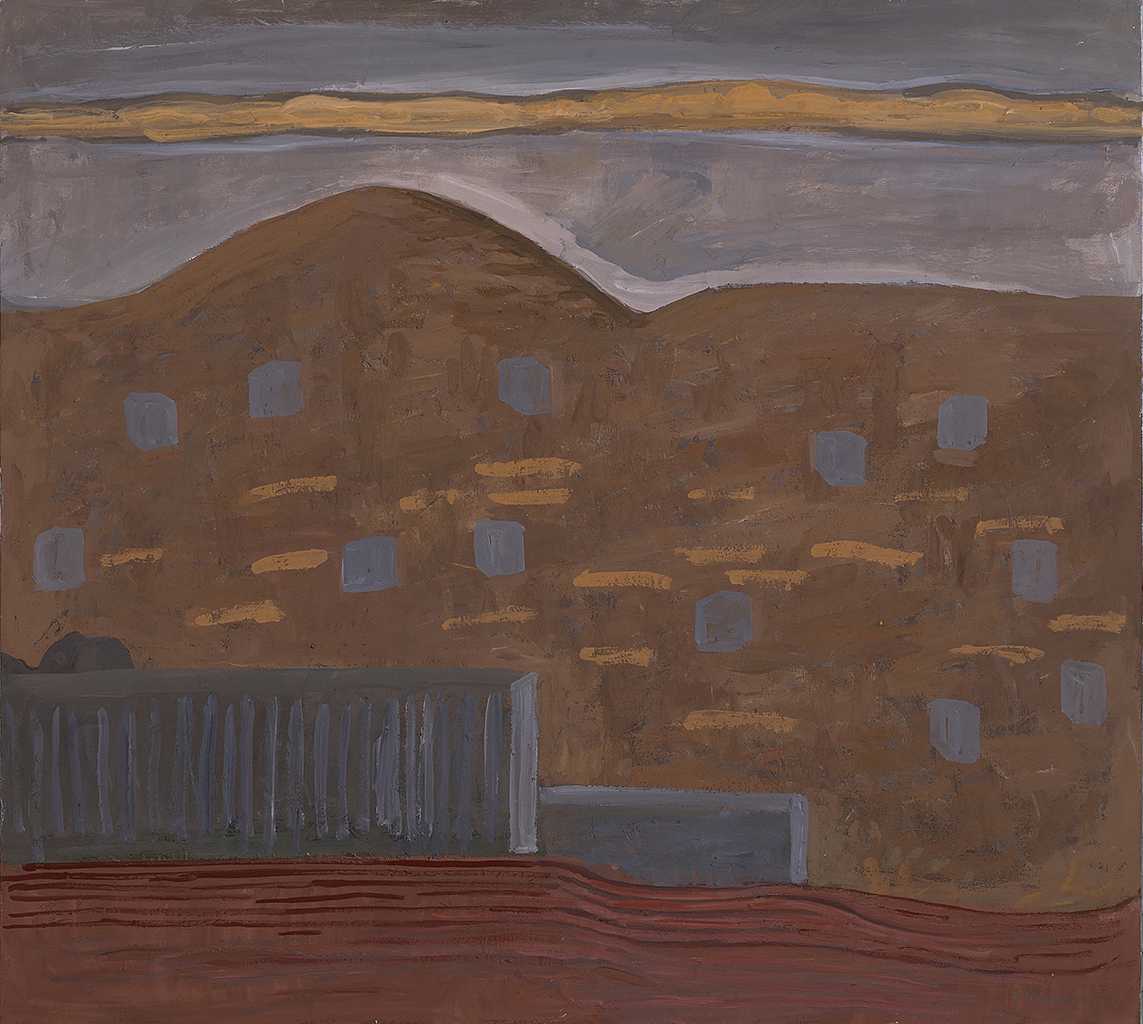

Ἡ ἀποθήκη τῶν ἐπιθυμιῶν,
Μικτή τεχνική,
90 × 100 cm
2025
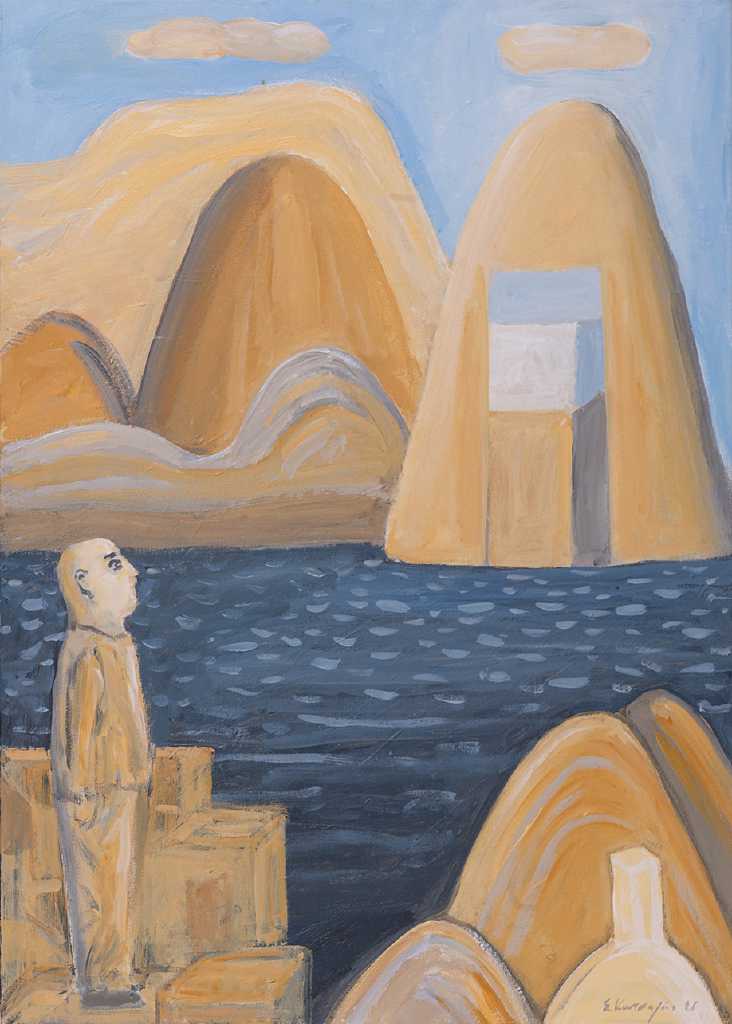

Ἡ γαλάζια κιβωτὸς τῆς συναἰρεσης,
Ακρυλικά,
70 × 50 cm
2026
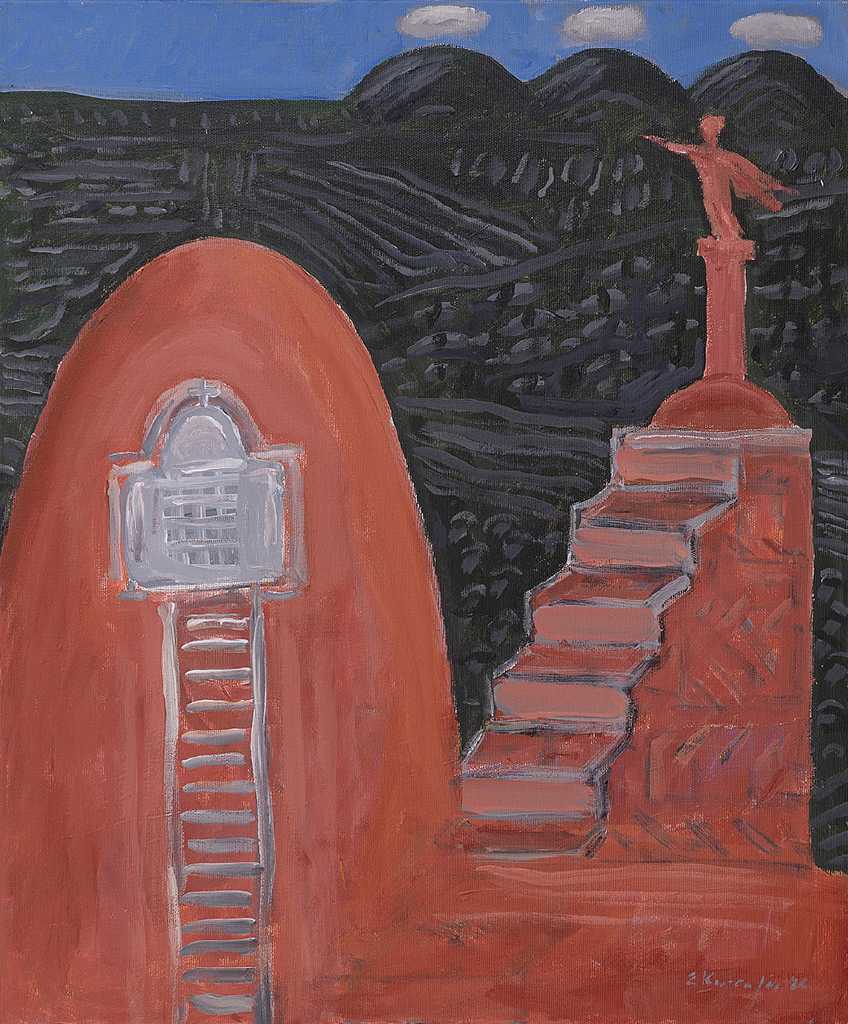

Ἡ ἐπιλογὴ τοῦ σημείου φυγῆς,
Ακρυλικά,
60 × 50 cm
2026
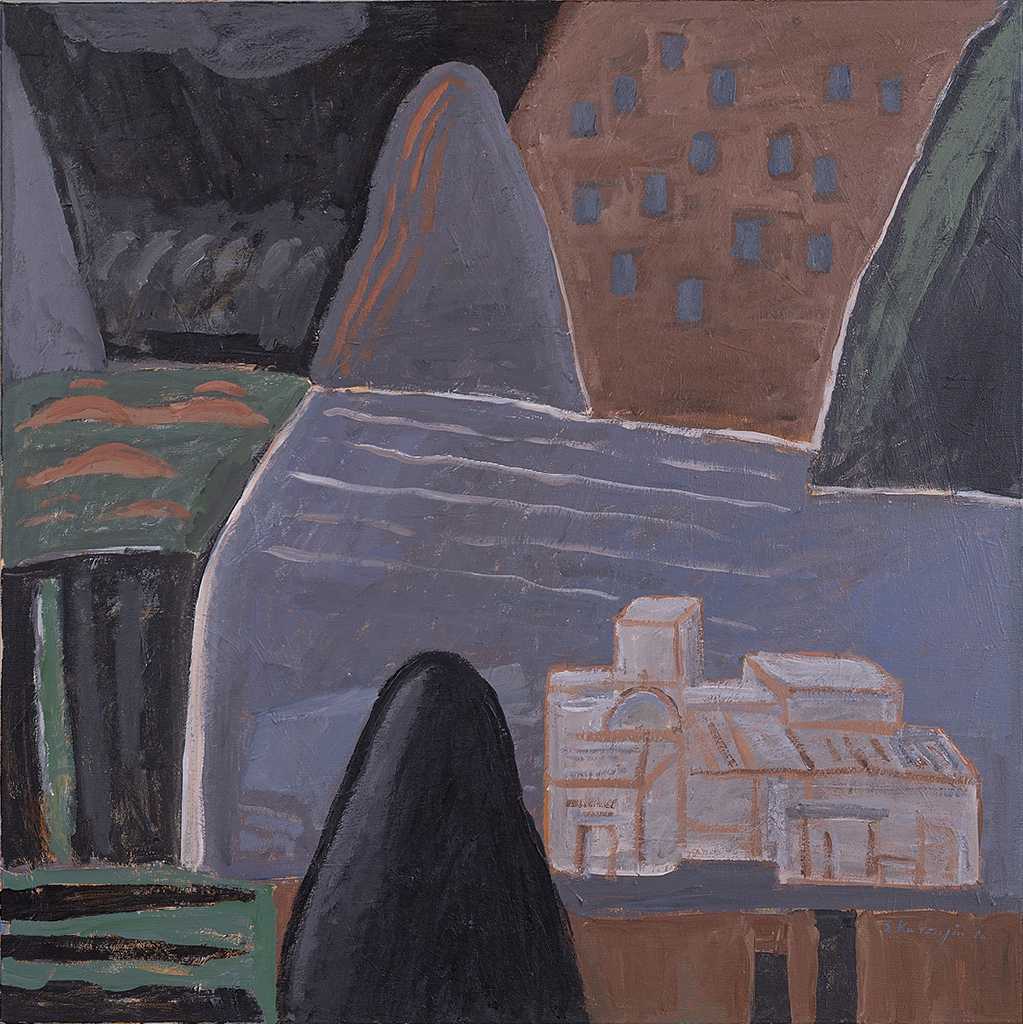

Ἡ εὔφορη πεδιάδα τῶν προσδοκιῶν,
c,
80 × 80 cm
2026
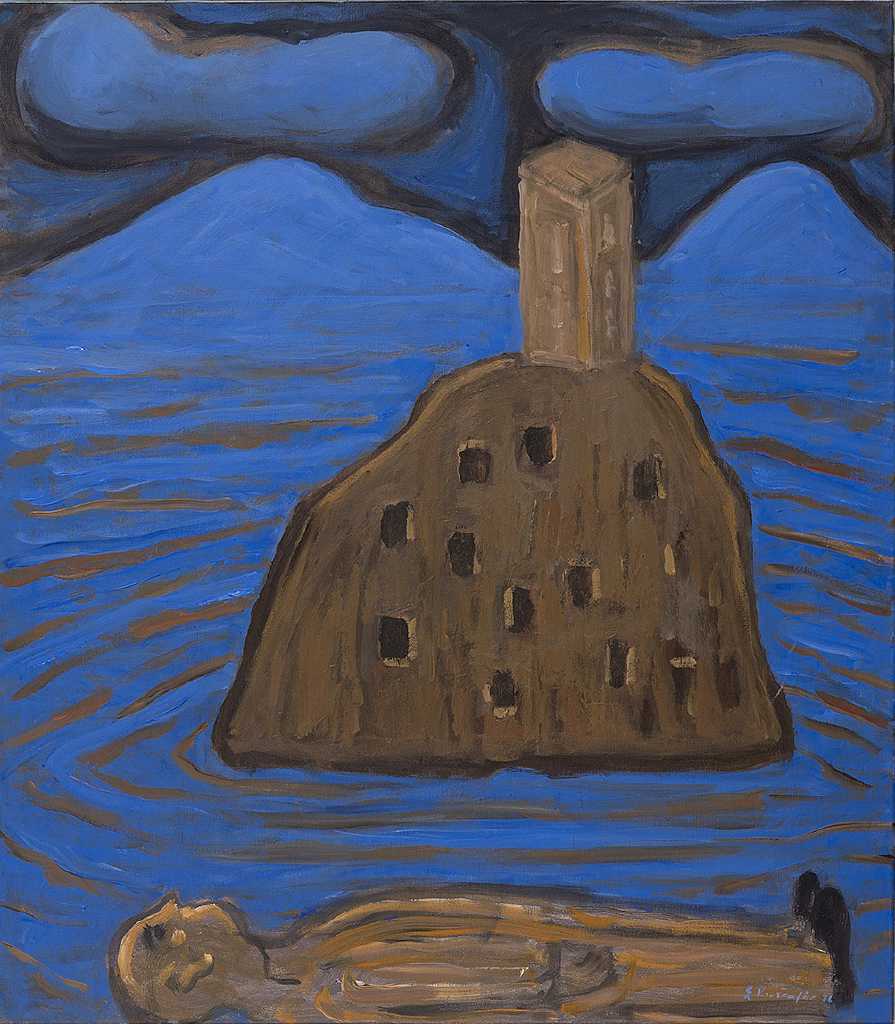

Ἡ ἰσορροπία ἀνάμεσα στὸν χρόνο καὶ στὰ πράγματα,
Ακρυλικά,
80 × 70 cm
2026
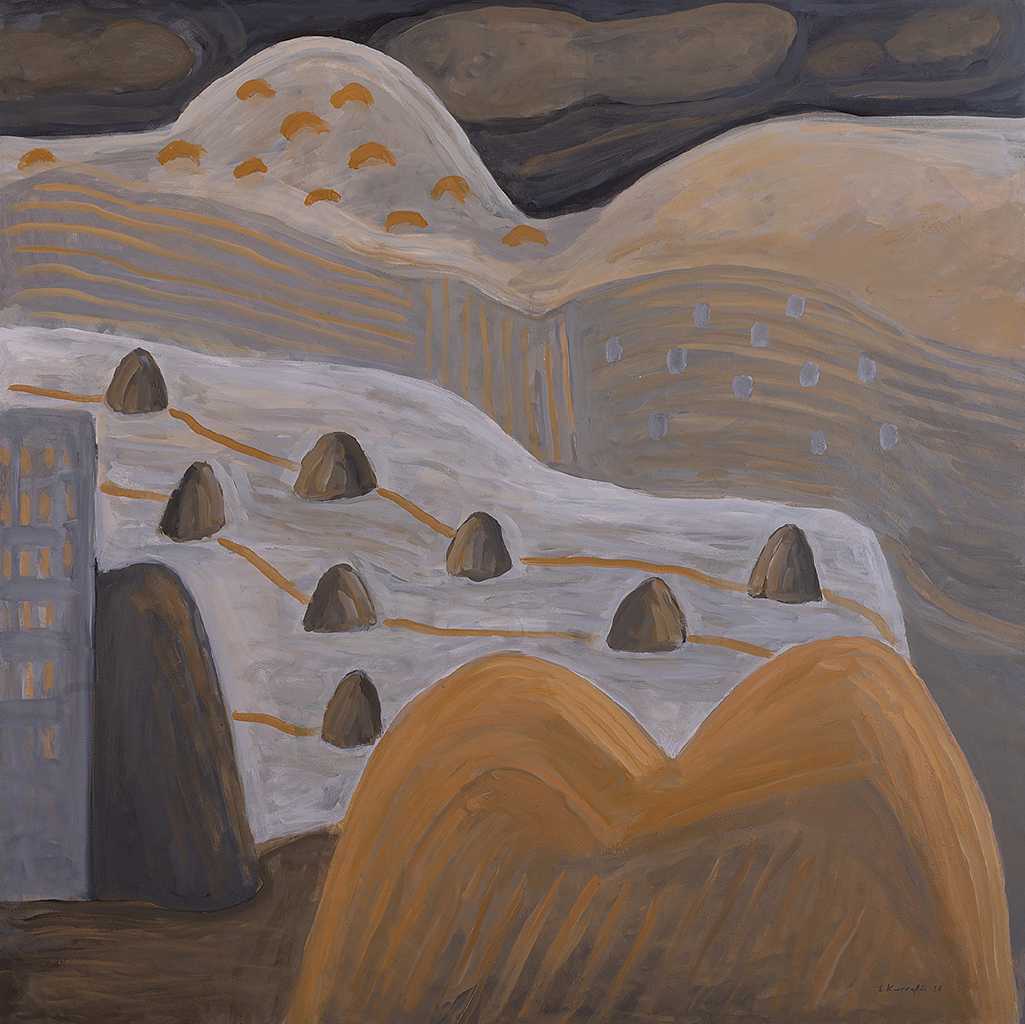

Ἡ καταγωγὴ τῶν αἰώνων,
Μικτή τεχνική,
135 × 135 cm
2026
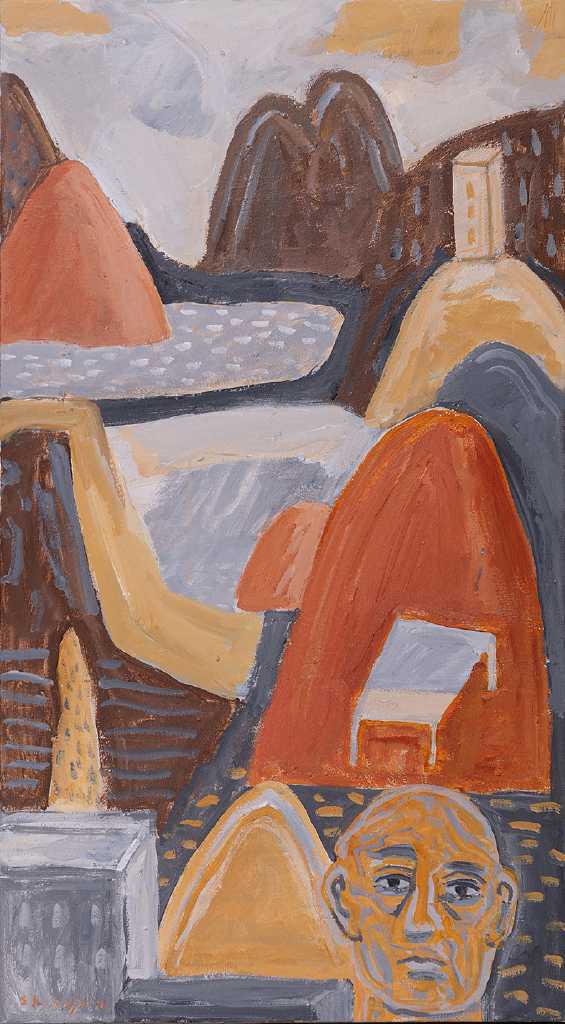

Ἡ περιπέτεια τῆς ἀκινησίας,
Ακρυλικά,
90 × 50 cm
2026
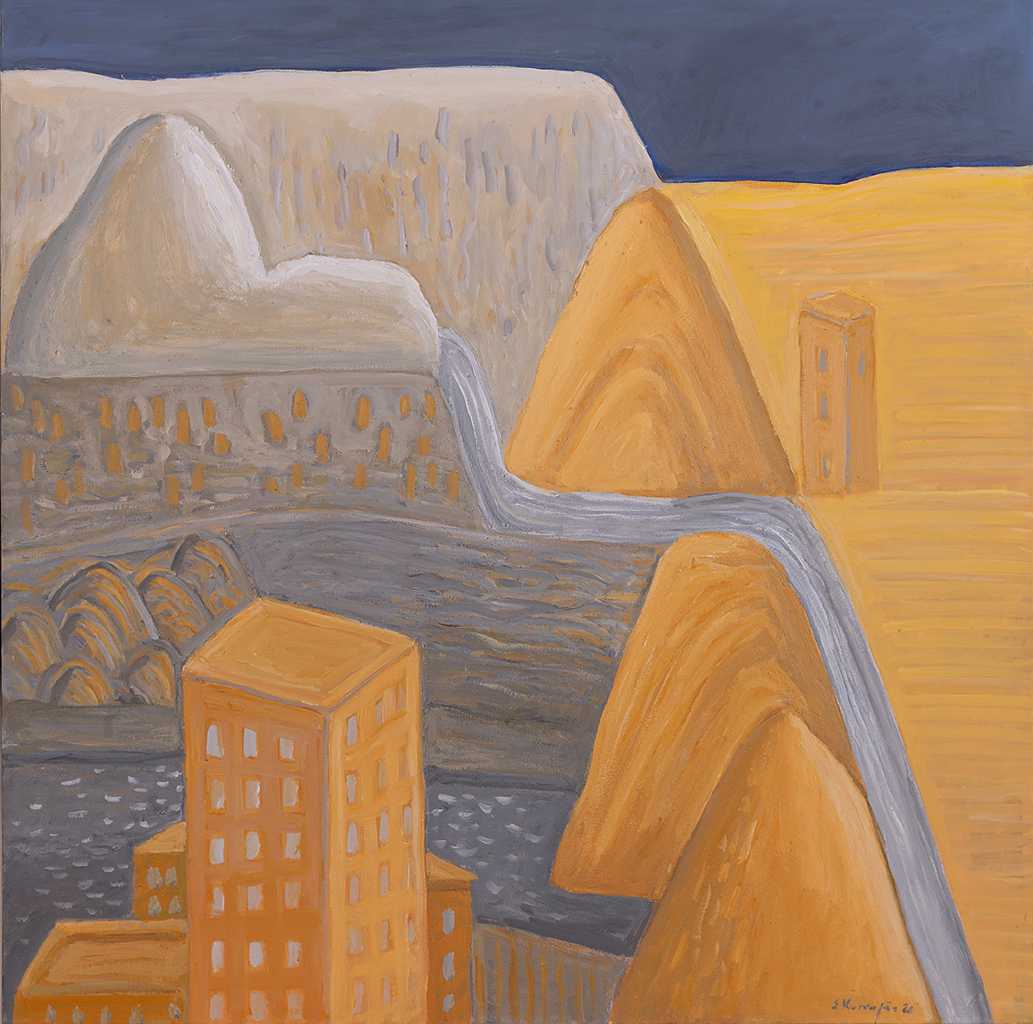

Ἡ ῥοὴ σὰν ὅριο,
Μικτή τεχνική,
105 × 105 cm
2026
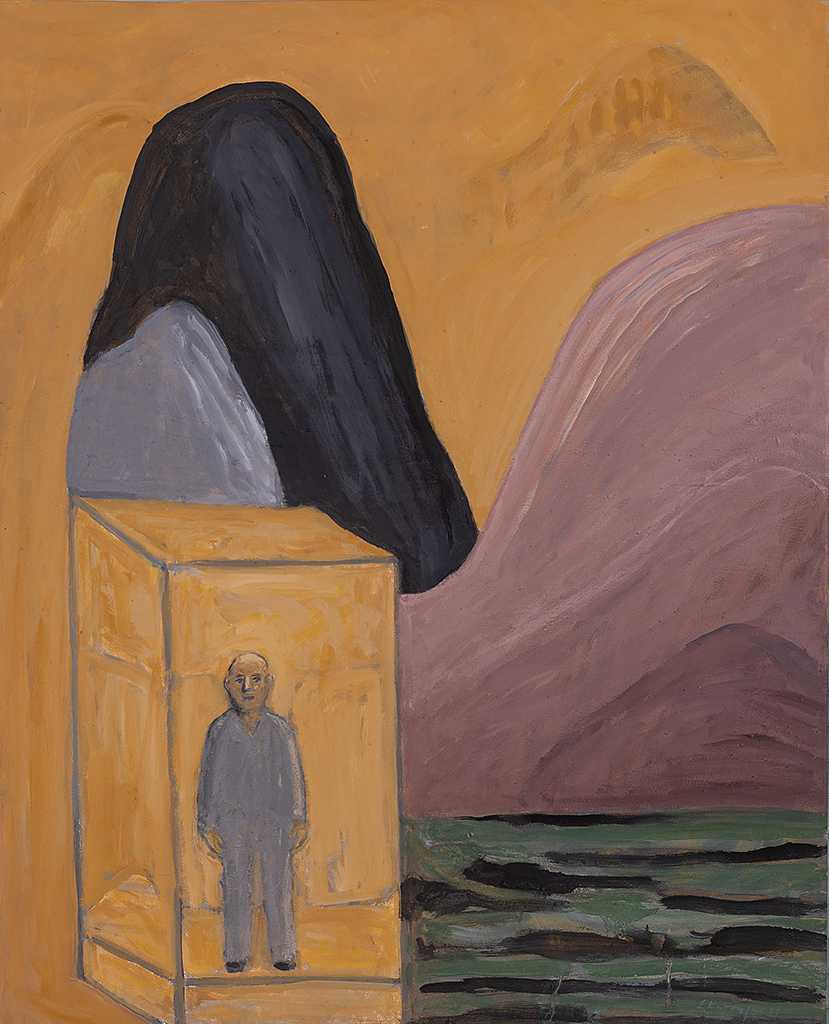

Ὁ ἄνθρωπος ποὺ πάσχει τὸν πολλαπλασιασμό,
Μικτή τεχνική,
100 × 80 cm
2026
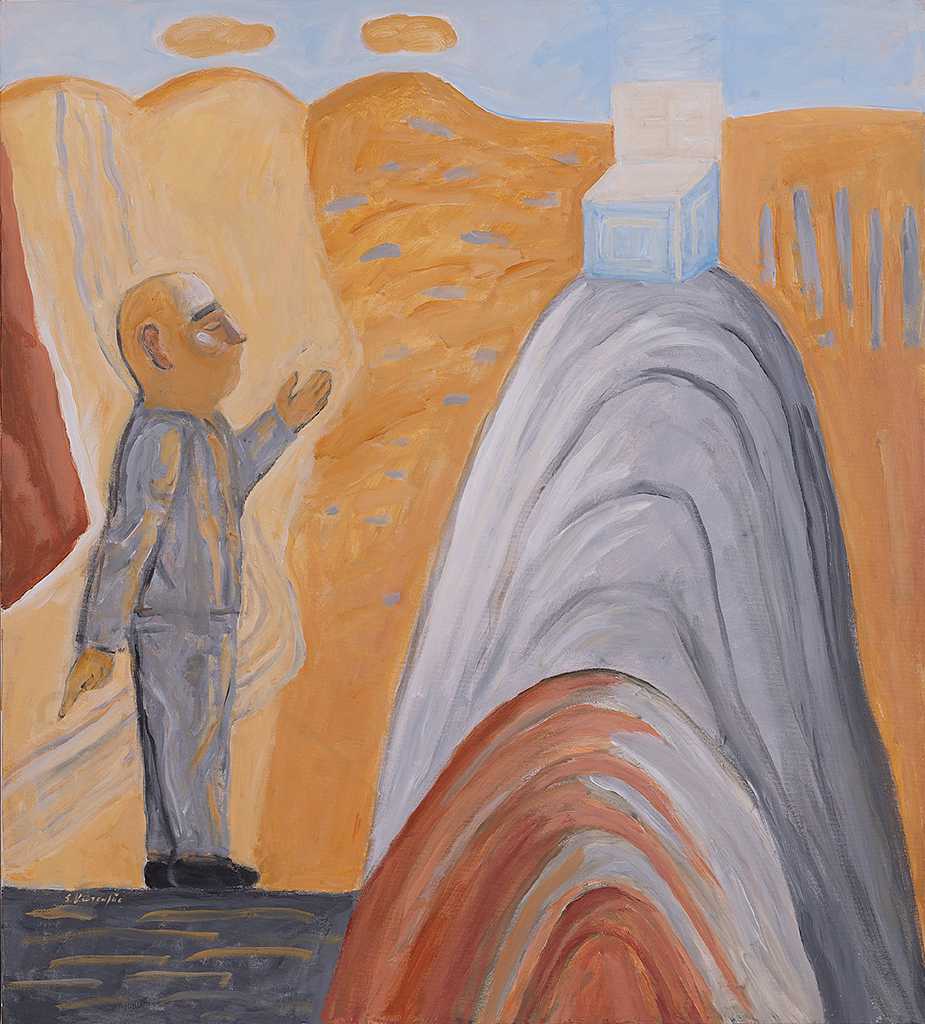

Ὁ βλέπων,
Ακρυλικά,
100 × 90 cm
2025
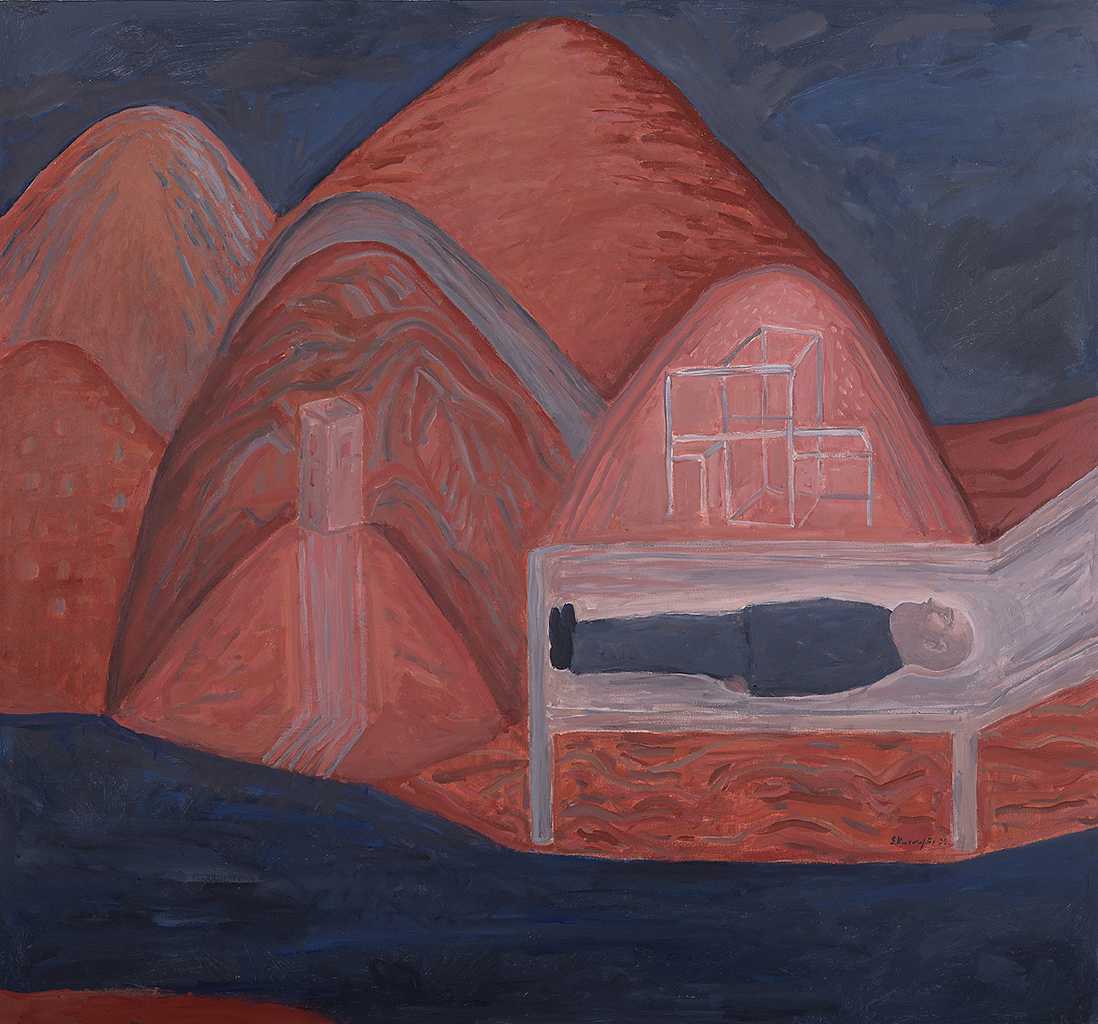

Ὁ Ταλθύβιος κοιμᾶται,
Μικτή τεχνική,
130 × 140 cm
2025
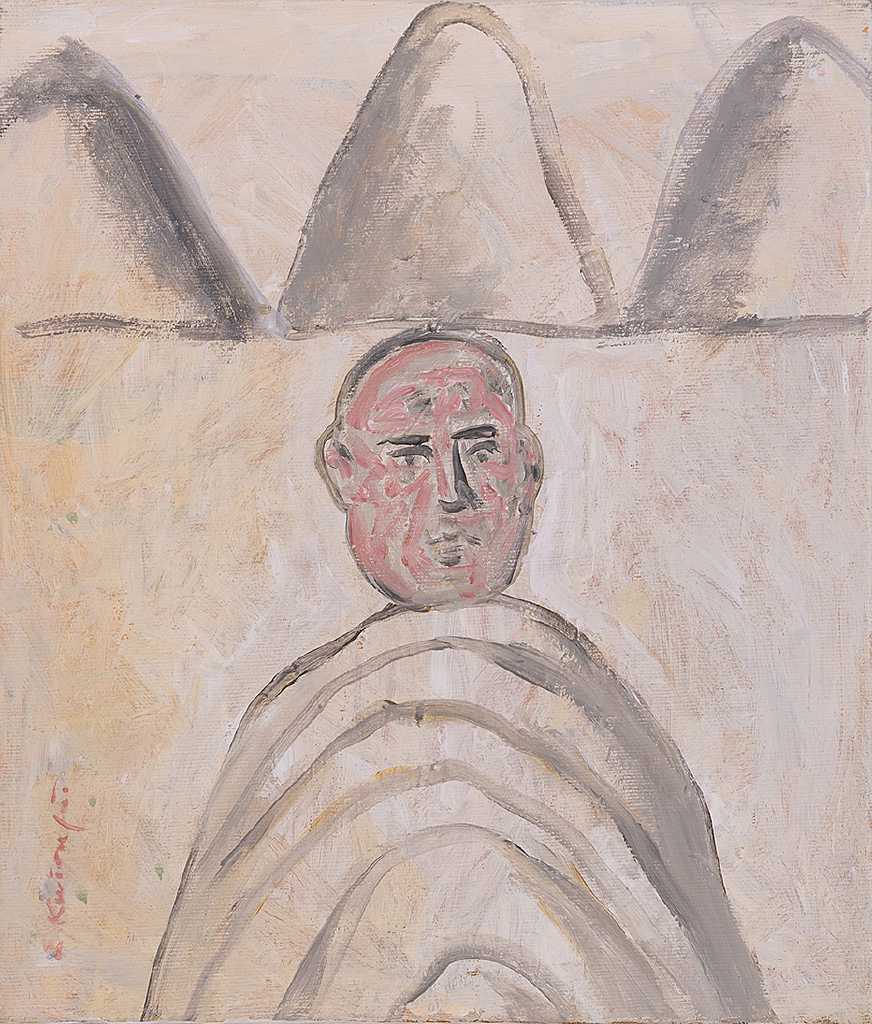

Ὅταν οἱ βεβαιότητες καταρρέουν,
Μικτή τεχνική,
35 × 30 cm
2026
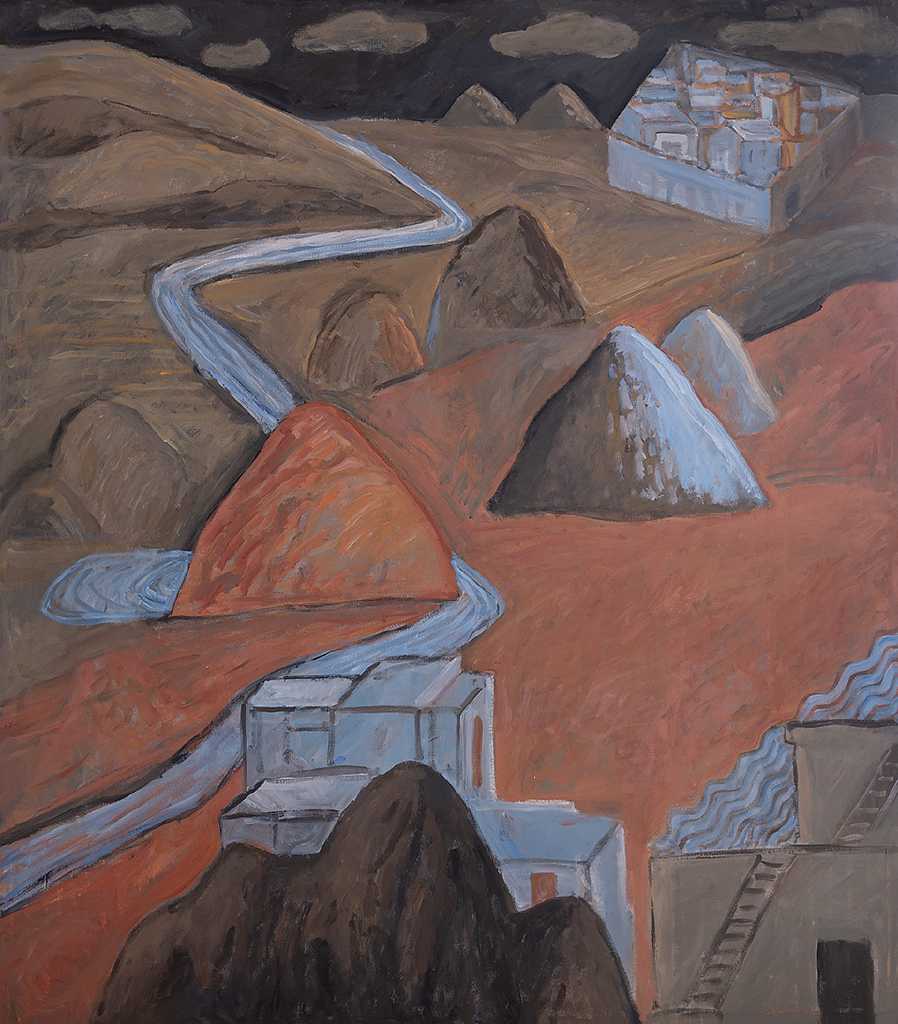

Πολλῶν ἀνθρώπων ἴδεν ἄστεα καὶ νόον ἔγνω,
Μικτή τεχνική,
160 × 140 cm
2025
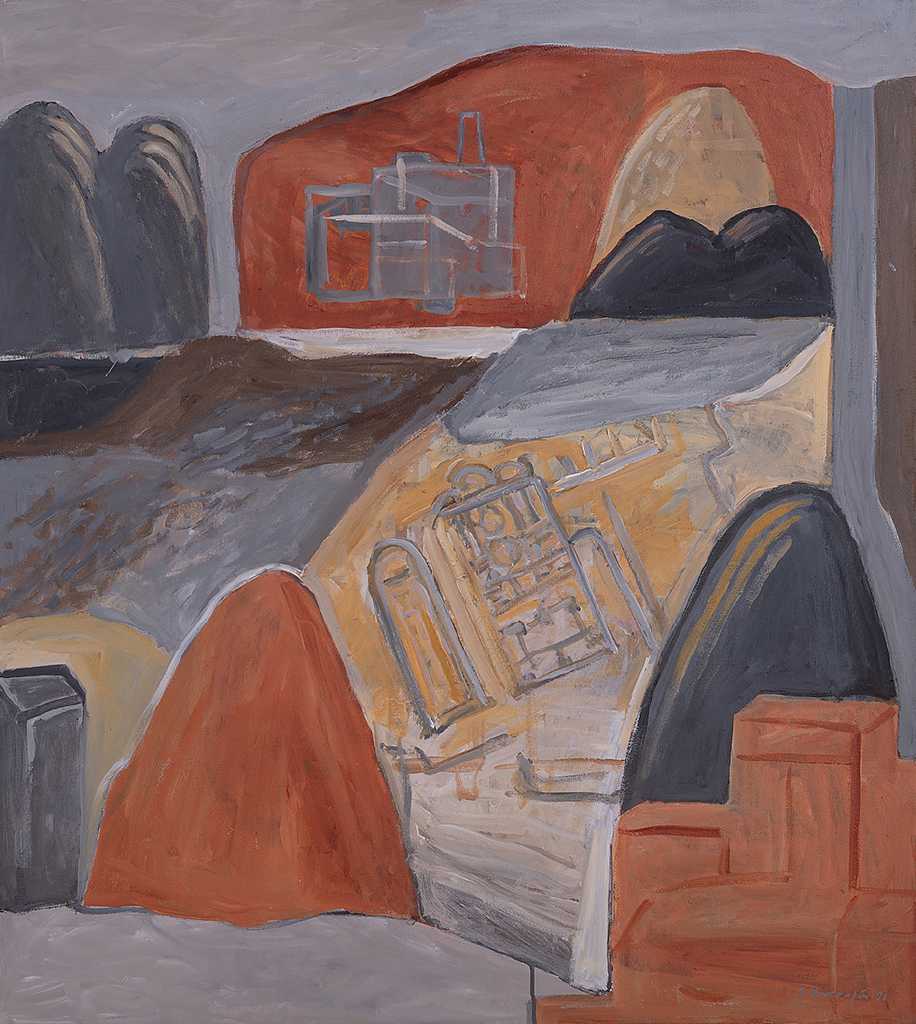

Πορεία στὴν Ἱερὰ Ὁδό,
Ακρυλικά,
100 × 90 cm
2026
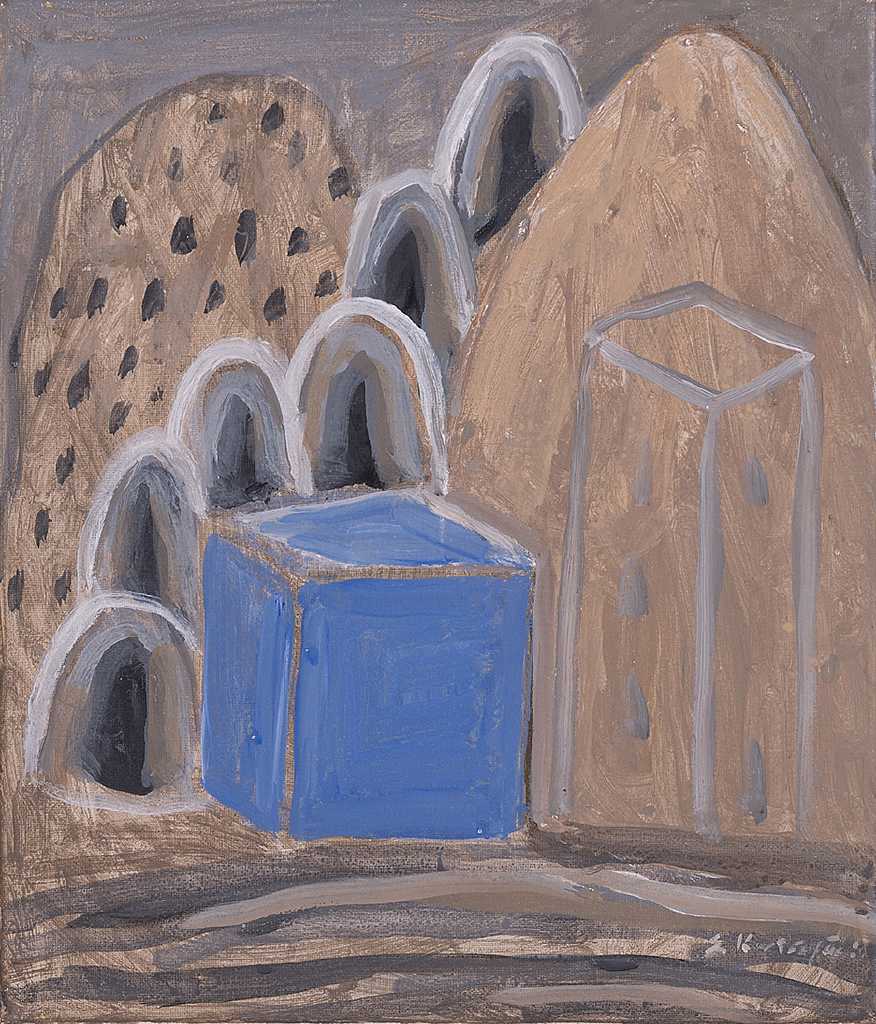

Συμπυκνωμένος χρόνος,
Μικτή τεχνική,
35 × 30 cm
2026
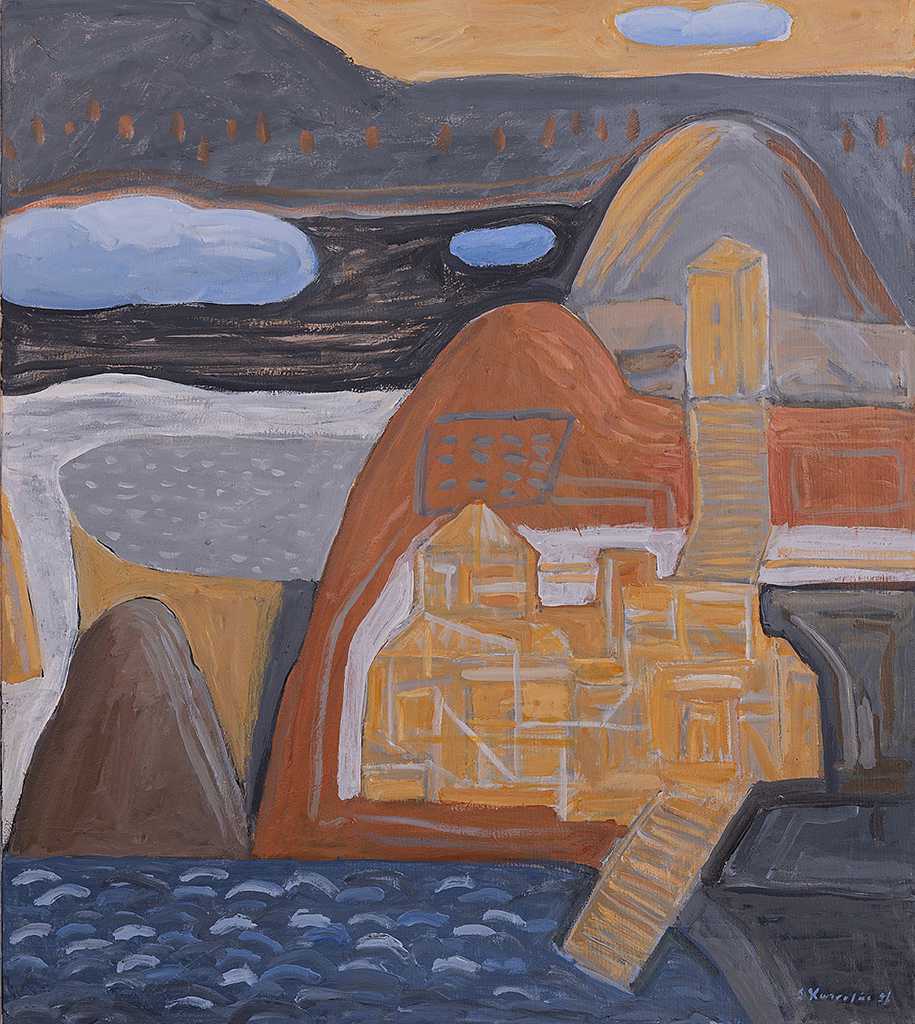

Τὴν ἡμέρα ποὺ ἔγιναν ὅλα σωστά,
Ακρυλικά,
90 × 80 cm
2025

Τὸ ἀσφαλὲς πέρασμα,
Ακρυλικά,
71 × 55 cm
2026

Τὸ σπίτι τοῦ Rochenko στὸ βουνό,
Ακρυλικά,
60 × 60 cm
2026

Φωτισμένη ἄνοδος,
Μικτή τεχνική,
90 × 90 cm
2025

Connected,
Μικτή τεχνική,
110 × 100 cm
2025